JAX’s Contributions to Metabolics Featured in Nature Metabolism
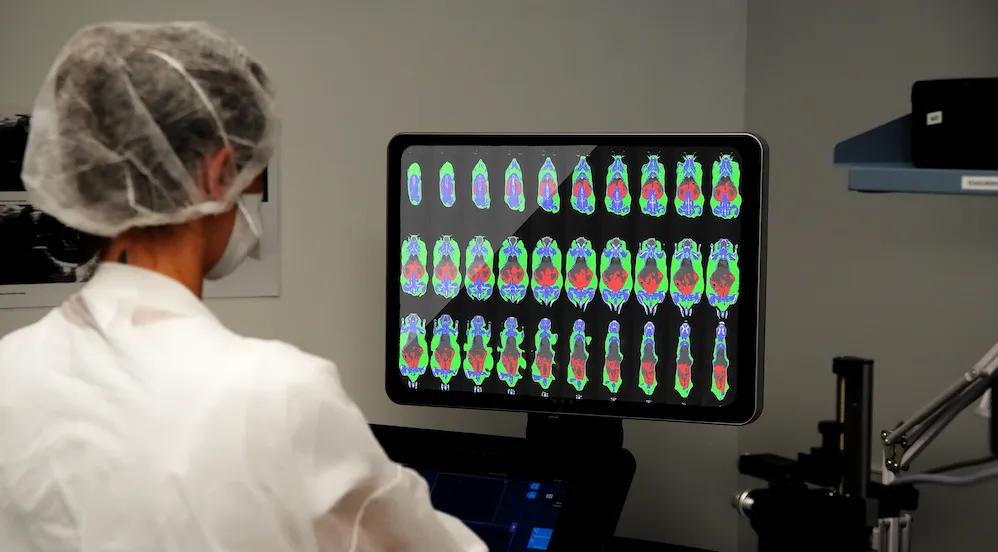
The Jackson Laboratory Contributes to Landmark Consensus Standards for Metabolic Research
Scientific progress depends on standardization. Just as consensus standards in genomics and metabolics revolutionized those fields by enabling cross-institutional collaboration and rigorous data comparison, metabolic research has long needed similar guidelines.
The Jackson Laboratory is proud to have contributed to addressing this gap. Published in Nature Metabolism in September 2025, new international consensus standards for indirect calorimetry in mice establish the first comprehensive guidelines for indirect calorimetry in preclinical research.
Why These Standards Matter
In metabolic research, preclinical indirect calorimetry systems allow for detailed monitoring and phenotyping of laboratory animals. By consistently tracking food and water intake, physical activity, oxygen consumption, and carbon dioxide production, these systems provide high-resolution insights into metabolic processes and are instrumental for researchers seeking to understand metabolic dynamics.
Yet despite recent advances in research technology and methods, the field suffers from a lack of standardization. With no prior international organization responsible for establishing standards on energy expenditure and energy balance, researchers use differing and even flawed data methodology and analysis. A meta-analysis of a single representative biological pathway (the transforming growth factor-β superfamily) found that researchers used eight different units to report oxygen consumption rates across 16 studies, including units like ml kg (lean mass)⁻¹ h⁻¹, ml kg⁻¹ h⁻¹, l kg⁻¹ h⁻¹, and ml kg⁻¹ min⁻¹. These variations make direct comparisons between studies nearly impossible without access to individual animal body-weight data.
This fragmentation is a fundamental barrier to scientific progress that wastes resources, hinders reproducibility, and slows the translation of discoveries into clinical treatments.
JAX’s Contribution and Impact on Metabolic Disease Research
Leveraging its >95 years of scientific excellence, Ansarullah, Associate Director of the Metabolic Phenotyping Core at The Jackson Laboratory, collaborated with 80 international researchers in the International Indirect Calorimetry Consensus Committee (IICCC). Led by IICCC Chair Alexander Banks, Director of the Harvard Energy Balance Core, they established comprehensive, published and unified standards to improve accuracy, reproducibility, and comparability in preclinical metabolic research using indirect calorimetry. These guidelines include key recommendations about reporting animal details, chamber characteristics, and calibration and quality control procedures, as well as important guidelines regarding data normalization, analysis, and visualization.
While initially designed for mouse studies, these guidelines extend to other rodent species like rats and hamsters. By creating community-driven standards, JAX and its collaborators aim to support metabolic research, enabling accurate data comparison across global research datasets and establishing robust, interconnected data repositories that can accelerate scientific discovery.
These standardized approaches will significantly impact metabolic disease research, facilitating more reproducible experiments, improved study designs, and faster translation of findings into clinical applications so that researchers worldwide can pool insights and identify complex patterns and connections that would remain invisible in isolated studies.
The JAX Metabolic Platform
The Jackson Laboratory offers comprehensive metabolic models and phenotyping services that support a range of research needs, from energy expenditure analysis to body composition analysis and metabolic tolerance testing. Learn more about our service capabilities by visiting the JAX Metabolic services webpage.