New JAX NSG portfolio strains support development of human NK cells in oncology models
Introduction
Natural killer (NK) cells occupy an intriguing niche between adaptive and innate immunity. Like cytotoxic T lymphocytes, they can recognize and kill infected or malignant cells and even share a perforin- and granzyme-mediated mechanism of cytotoxicity, among other modes of killing, some of which are mentioned below in context of new, exciting work from a JAX collaborator. Unlike lymphocytes of the adaptive immune system, however, NK cells lack clonotypic receptors and instead rely on other mechanisms of abnormal cell recognition. For example, as early as the 1980s, the “Missing Self” hypothesis was proposed, where NK cells evolved to circumvent the immune evasion via downregulation of MHC Class I, used by intracellular pathogens and tumors, by preferentially killing cells expressing low levels of MHC Class I (Kärre et al., 1986). In this way, their function is complementary to cytotoxic T cells, which rely on specific antigen presented with MHC Class I for recognition of non-self. While this mechanism of recognition allows for the exquisite specificity of T cells for antigen, it represents a sort of vulnerability that pathogens and tumors exploit alike—which NK cells deftly sidestep with their more generic approach to immunity. It’s also worth noting that NK cells play a role in the general maintenance of self-tolerance, along with other physiological functions (Poli et al., 2018).
Over the past decade, the potential of NK cells as promising candidates for next-generation immunotherapies has come into focus, but at the time of this writing, there are still no FDA approved biologics in this space (though some are in clinical trials). This absence, which scientists such as Dr. Martin Felices of the University of Minnesota are keen to remedy, reflects both the complexity of NK cell biology and the limitations of traditional research models. Fortunately, advances in immune humanized mouse systems, particularly newer human transgene-expressing strains on The Jackson Laboratory’s flagship immunodeficient NSG background, engrafted with CD34⁺ human hematopoietic stem cells (CD34+ HSC) or peripheral blood mononuclear cells (PBMCs), suggest a clearer path toward successful NK-targeting treatments.
Challenges of targeting NK cells in both preclinical and clinical research
Before we delve into Dr. Felices’ latest work evaluating tri-specific NK-cell engagers (TriKE) in xenogeneic models of cancer in new strains of JAX NSG mice, let’s take one more step back to appreciate the challenges of targeting NK cells in both preclinical and clinical research. A major obstacle is the difficulty of expanding NK cells ex vivo. While T cells can be reliably activated and proliferate readily, NK cells require more complex cytokine support, notably from IL-15. Even when expansion is successful, NK cells tend to persist only briefly after xeno-engraftment onto mice or infusion into patients. Their short lifespan and limited in vivo proliferation have made it difficult to achieve lasting therapeutic effects. They also face the same issues as other immune cells targeted for immunotherapy, namely, hypoxia and immunosuppressive signals in the tumor microenvironment, and the challenge of how to propel migration to the physiological site of pathology within the host.
Perhaps one of the most significant barriers, and apropos to our discussion today, has been the lack of convincing preclinical models. Traditional (e.g., syngeneic) mouse models of course do not possess human NK cells. Mouse NK cells differ substantially from human NK cells in at least a few ways: the metalloproteinase ADAM17 does not cleave CD16 (a major activating receptor for NK cells that mediates antibody-dependent cellular cytotoxicity (ADCC)) in mice, as it does in humans, and as such is one of the targeted moieties in the novel TriKEs developed by Dr. Felices’ lab; CD16 signaling is much weaker in mice than in humans; ADCC in mice requires days of priming, while direct CD16 crosslinking induces robust NK cell activation in humans. Overall, these and other factors differentially impact the kinetics of ADCC in each species, severely limiting the translational value of mouse studies alone. But purely human NK cell systems present their own limitations as well, principally because the study of NK cell interactions with immune cells of only mouse origin in the tumor environment would be challenging at best, even if they could fully replicate ornate human cytokine networks and receptor interactions. Even immunodeficient mice engrafted with human tumors fail to capture the nuances of human NK cell biology.
New JAX NSG strains support the development of human NK cells in diverse oncology models
This is where immunodeficient mouse strains engrafted with a broader representation of human immune cells can provide the translational scaffold needed to evaluate NK cell-targeted immunotherapies. Yet, until recently, the aforementioned challenges of supporting human NK cell development in experimental systems remained. For example, researchers must typically exogenously administer IL-15, which presents its own technical challenges in vivo, for a nonetheless limited observational window. Now, with The Jackson Laboratory’s newly developed NSG strains which stably express physiological levels of IL-15 to support NK cell development as well as other human cytokines to support key myeloid lineages, including NSG Flt3KO hFLT3LG hIL15 (a.k.a. NSG-FLT3-IL15) and NSG-SGM3-IL15-MHC I/II DKO (a.k.a. S15-DKO), Dr. Felices’ lab has obtained stellar early results looking at TriKEs in the settings of both solid and liquid tumors, as well as autologous and allogenic treatment modalities.
First, they comparatively engrafted NSG vs. NSG-FLT3-IL15 (F15) mouse strains with an ovarian cancer cell line expressing a luciferase cassette (OVCAR8luc) and with the same human donors. They also compared engraftment of NSG with enriched NK cell fractions vs. CD34+ HSC-humanized mice. CD34⁺ human hematopoietic stem cells (CD34+ HSC) are pluripotent, possessing the genetic potential to yield a variety of immune cell subsets in the host animal. Looking at blood and several tissues including, spleen and ovary, the researchers found that the CD34+ HSC-humanized F15 mice presented the most compelling, “starry night” picture of immune architecture (Figs. 1 and 2), with abundant T cells and numerous dendritic cells, whereas B cells dominated the original NSG mouse strain.
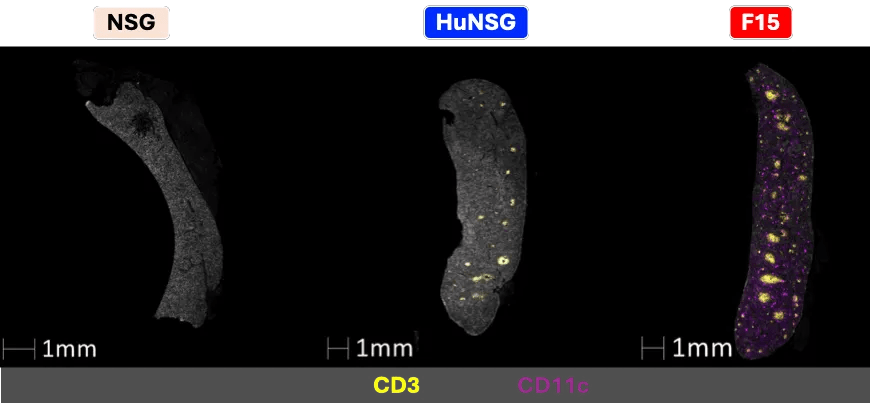
Figure 1: Immune complexity differs significantly between models. Spleens of the two strains demonstrate an enhanced immune complexity in the Hu F15 model
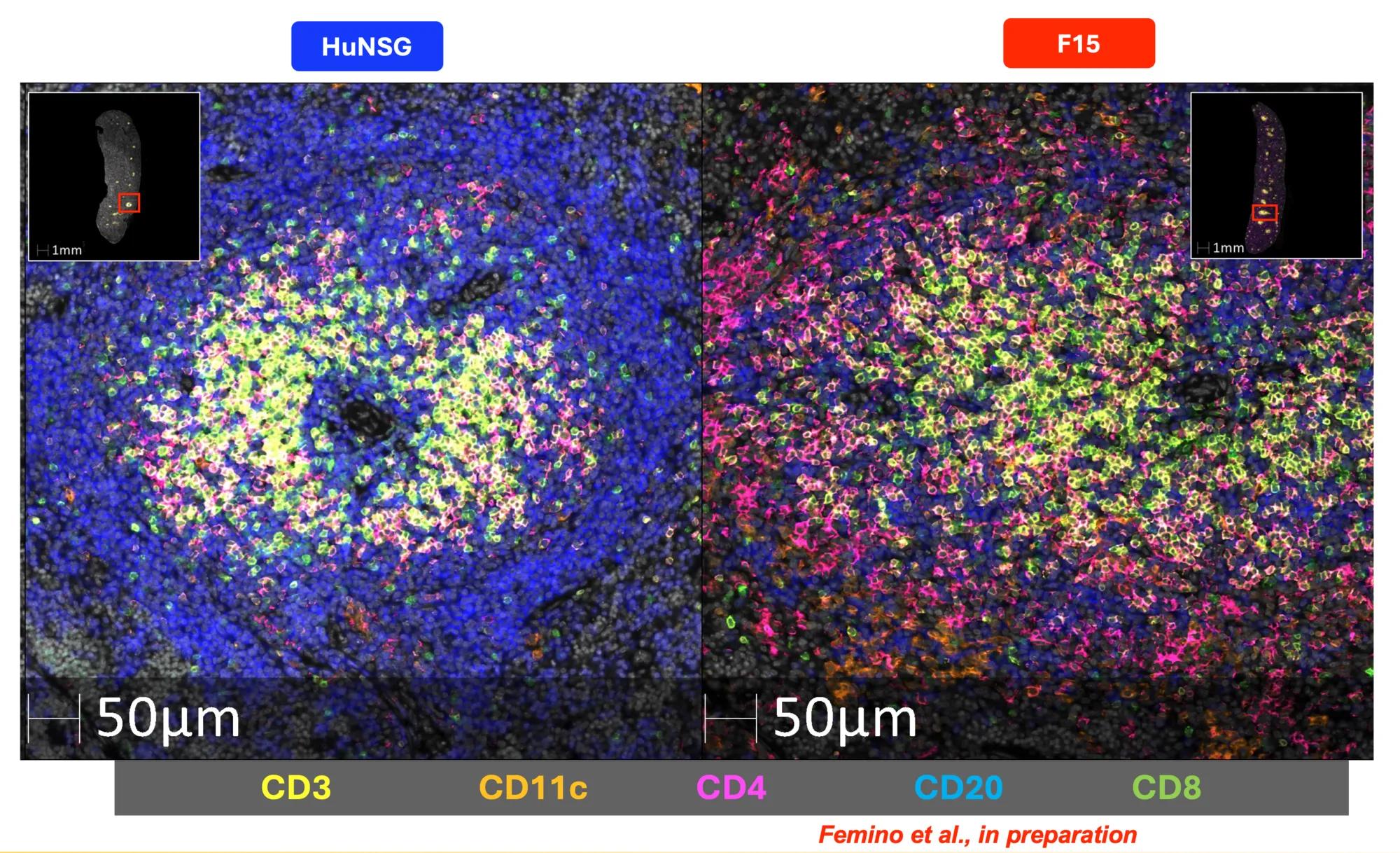
Figure 2: Immune complexity differs significantly between models. Enlarged view of one of the above foci, showing the diversity of cells present in the Hu-F15 model
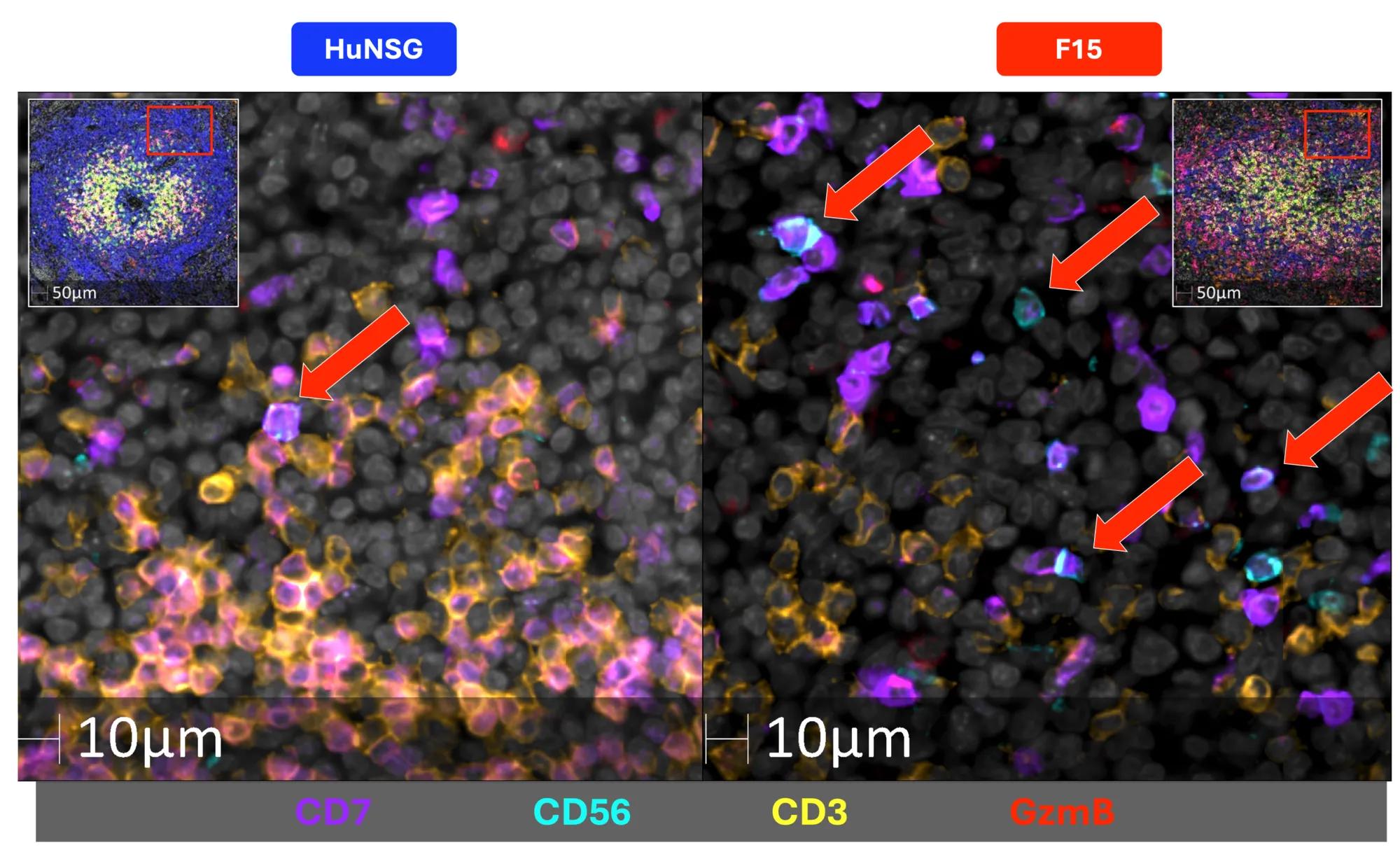
Figure 3: NK cells more readily identified in hu-F15 mice, as identified by CD7 and CD56 staining
In addition, significantly more NK cells were observed in the F15 strain (Fig. 3), and these cells expressed higher levels of functional markers CD56, CD94, CD576, T-bet, Granzyme B and Perforin, as well as higher levels of PD-1. Also noteworthy were multiple NK subsets positive for at least three different Killer Immunoglobulin Receptors (KIR), a later stage differentiation marker, indicating the presence of relatively mature cohorts of NK cells that one sees in patients. These cohorts were not observed in the original, parental NSG strain. Finally, one of the most compelling observations in this experiment was the variation in response to the TriKE among different human donors, underscoring the capability of the CD34+ HSC-humanized F15 mouse strain to recapitulate the variation observed in patients in the clinic. The story is still unfolding as the manuscript is in preparation, but researchers have already acquired some preliminary data tying the responsiveness of donors to expression levels of a particular inhibitory receptor.
Secondly, Dr. Felices’ group utilized the just-launched NSG-SGM3-IL15-MHC I/II DKO (S15-DKO) strain to evaluate tumor control in a lymphoma system. They injected human PBMCs that had B cells targeted by a CD19-targeting TriKE, as well as a CD19-expressing tumor (Raji-Luc). Comparing three different patients, the scientists again observed a variability in response to the TriKE, supporting the relevance of this model to the spectrum of clinical outcomes observed in patients receiving these kinds of biologics. Later, they compared the human NK cells from the mice to those directly isolated from the healthy donor PBMC supply in their ability to retain functionality in a standard ex vivo assay designed to capture secretion of key cytokines (IFN-gamma and TNF-alpha). In contrast, the loss of functionality the authors observed in the past in the context of the original, parental NSG strain, there was no similar diminution in functionality; in fact, their cytokine production levels were easily on par with that seen from T cells’.
Lastly, Dr. Felices’ group aimed to evaluate an autologous system where both tumor and PBMCs are derived from the same patient, given the near-future potential of this mode of NK-directed therapy. It is more challenging for autologous cells to kill a tumor due to inhibitory signals from the tumor, often mediated by KIR-HLA interactions. The group had available a repository of AML patient PBMCs and bone marrow (BM), and selected a patient with abundant AML blasts, transitional (pro-) blasts, and lymphocytes present to engraft onto S15-DKO mice. They then evaluated the spleen and blood of an early-dying mouse and observed all three populations 14 days post-engraftment. Remarkably, the mouse BM was essentially devoid of mouse CD45+ cells, indicating a very efficient engraftment. In the mice treated with TriKE, an expansion of lymphocytes was observed—indicating that this model system holds promise as an avatar for the human patient.
Key Takeaways
The newer mouse strains such as NSG Flt3KO hFLT3LG hIL15 (a.k.a. NSG-FLT3-IL15) and NSG-SGM3-IL15-MHC I/II DKO (a.k.a. S15-DKO), recapitulate a greater immune complexity compared to the original NSG strain, including NK cells, T cells, and key myeloid subsets, and without the need for exogenous administration of IL-15. This pioneering work demonstrates promise for both solid and hematologic tumors, as well as autologous and allogenic treatment modalities.
For a deeper look at the work of Dr. Martin Felices and colleagues, a discussion on relevant facets of NK cell biology, and more state-of-the-art NK cell engagers in their pipeline, please view our recent archived webinar with guest speaker Dr. Martin Felices.
View our catalog of cell humanized mouse models for immuno-oncology research here.
References
Kärre K., Ljunggren H.G., Piontek G., Kiessling R. Selective rejection of H-2-deficient lymphoma variants suggests alternative immune defence strategy. Nature. 1986 Feb 20-26;319(6055):675-8. doi: 10.1038/319675a0. PMID: 3951539.
Poli A., Michel T., Patil N., Zimmer J. Revisiting the Functional Impact of NK Cells. Trends Immunol. 2018 Jun;39(6):460-472. doi: 10.1016/j.it.2018.01.011. Epub 2018 Feb 26. PMID: 29496432.